
Sustainability

Renewable Fuels

The State of Hawaiʻi has long been recognized as a leader in adopting policies that advance clean energy and decarbonization, and significant progress has been made by the electric utilities and energy stakeholders in achieving those objectives, including all renewable targets to date…

– Gov. Josh Green,
Executive Order NO. 25-01
January 2025

The Future of Fuel

Fueling Hawaii’s 100% Renewable Future
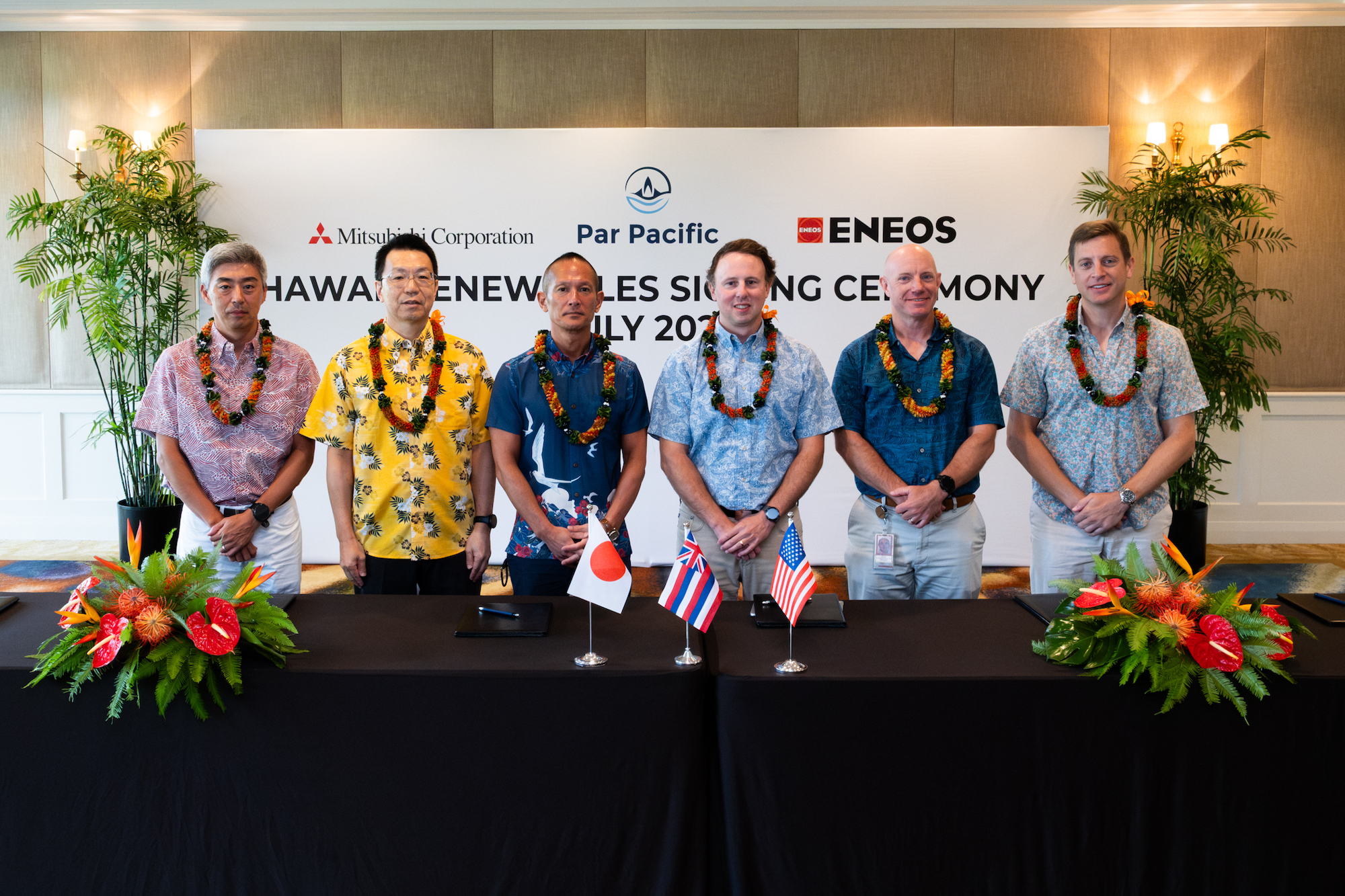
Hawaii is striving to reach its goal of using 100 percent renewable energy by 2045, and Par Hawaii is doing its part to support this effort. The refinery’s $27 million distillate hydrotreater that was installed in 2019 has been converted and upgraded to process renewable feedstocks such as plant-based oils and recycling cooking oil, displacing imported crude oil. This has attracted global attention and has allowed Par Hawaii to operate the state’s largest renewable fuels manufacturing facility.
Par Hawaii - Featured Careers Spotlight

Opening the Door to New Opportunities

In 2025, two Japanese companies joined Par Hawaii to form a joint venture to produce renewable fuels made from plant-based feedstocks and recycled cooking oils, supplementing conventional fuels production at the Kapolei refinery. This will help to decarbonize multiple-industry sectors.

Par Hawaii’s parent organization, Par Pacific Holdings, Inc., signed agreements with Mitsubishi Corporation and ENEOS Corporation, to form Hawaii Renewables, LLC. Mitsubishi and ENEOS have formed Alohi Renewable Energy, LLC, and together contributed $100 million and own 36.5 percent of the Hawaii Renewables partnership. Par Pacific has retained a 63.5 percent equity stake.

A Perfect Match

As our state gets close to the 100 percent Renewable Portfolio Standards (RPS) deadline in 2045, we see new possibilities for future opportunities to meet Hawaii’s energy needs.

Every partner brings a lot to the table.

Par Hawaii refinery’s highly-skilled operating team as well as refining and logistics infrastructure and processes are critical to the success of the joint venture. Par Hawaii’s refinery team oversees the renewable fuels project and is responsible for the facility’s day-to-day operations.
Mitsubishi is a global integrated business and recognizable consumer brand with offices and subsidiaries throughout the world. Their assets include Petro-Diamond Inc.’s terminal in Long Beach, California, and they have expertise in global feedstock procurement, adding significant value to the joint venture.
ENEOS is Japan’s leading downstream energy company with fuel manufacturing and sales expertise to complement and strengthen the experience of the other partners.
Together, the organizations will own and operate the state’s largest renewable fuels manufacturing facility, capable of producing a total of about 60 million gallons of renewable diesel, sustainable aviation fuel, and renewable naphtha on an annual basis. The Par Hawaii refinery is the first in the world to adopt this new pretreatment technology developed by Lutros, LLC, which is a critical part of the renewable fuels production process.

Supporting a Circular, Self-Sustaining Economy

Growing Our Own Energy

The percentage of renewable energy generated in Hawai‘i has doubled since 2014.
In 2024, 33% of Hawai‘i’s energy came from renewable sources. The state’s goal is to adopt 70% renewable energy for the electricity sector by 2030.

Par Hawaii is helping to contribute toward this goal with the production of renewable fuels. In 2022, Par Hawaii and Hawaiian Airlines announced their plans to explore the local production of sustainable aviation fuel (SAF). We invested in an engineering study to evaluate the feasibility of converting a portion of Par’s facilities to produce SAF; explored the potential to grow oil-yielding crops in Hawai‘i as well as import sustainable feedstock; and have pursued policy advocacy, including an evaluation of the best policy mechanisms to advance SAF in Hawai‘i.

The local production of SAF is now a reality in Hawaii.

SAF is made from sustainable feedstock such as plant-based oils or used cooking oil, which cuts lifecycle carbon emissions by up to 80 percent compared to conventional jet fuel. Pono Energy, a partner of Par Hawaii and Hawaiian Airlines/Alaska Air Group, is now looking at local sources of feedstock, such as camelina, grown here in the islands.

Pono Energy, associated with Pono Pacific, the state’s largest land conservation company, has more than 20 years of conservation experience coupled with agriculture and renewable energy experience. Pono Energy is now exploring ways to scale the growth and production of camelina on Kauai, Maui, and Hawaii Island.

Compatible with Agriculture
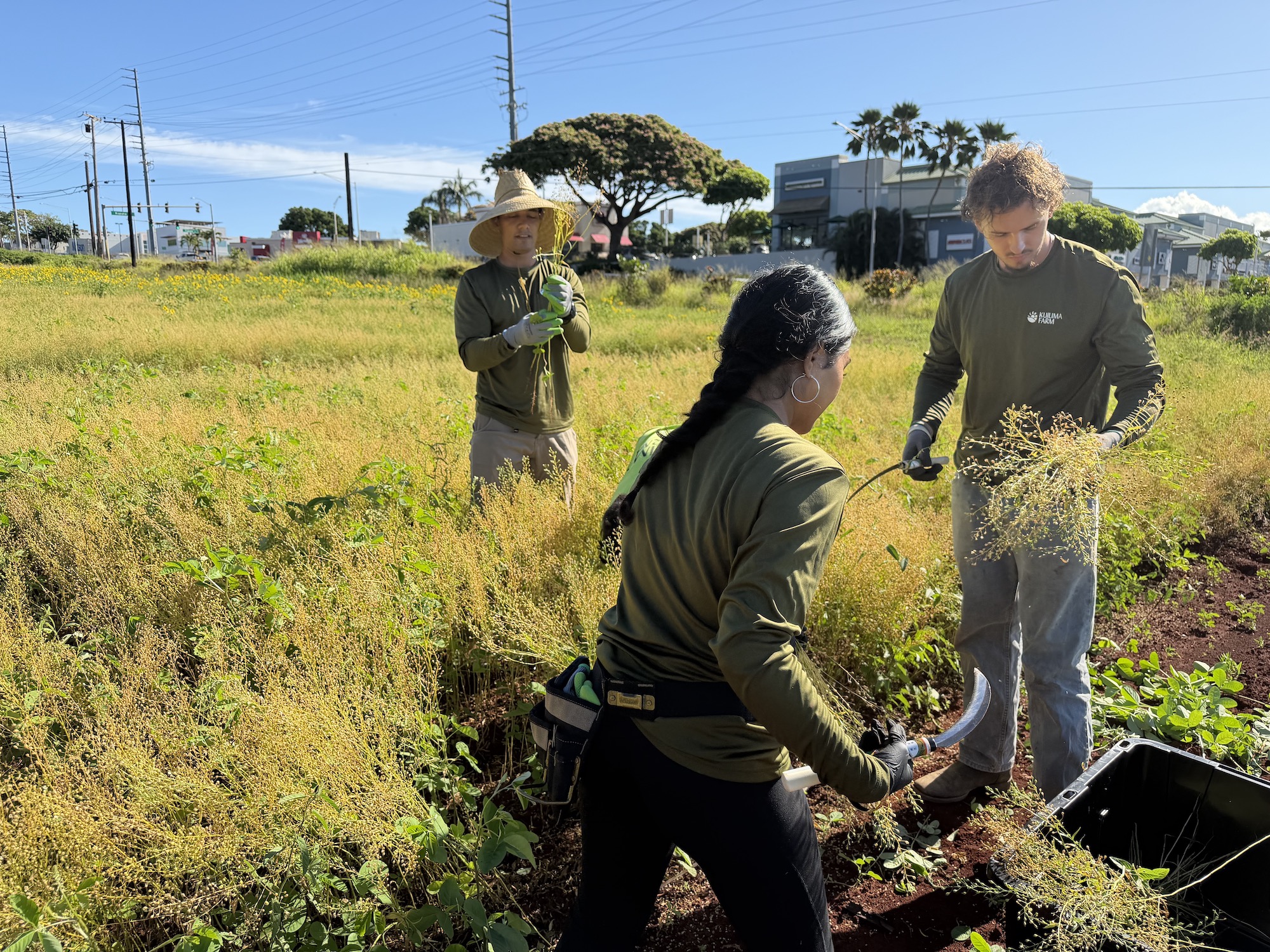
Camelina was selected as the oil-producing crop for Hawaii because of its high oil content and low water requirement. As a rotational cover crop, it can enhance soil health when food crops of not being grown. This creates the intersection between food security and energy security. If camelina is commercially scalable in Hawai‘i’s temperate weather year round, locally grown feedstocks could provide Hawai‘i farmers a viable economic commodity for Par Hawaii, provide animal feed, and make sustainable use of idle lands. It’s a win-win for everyone along the supply chain.

Contact Us

If you have any questions, suggestions or concerns, please reach out to Marc Inouye, our Director of Government and Public Affairs, at minouye@parpacific.com or call (808) 203-2344 (office) or (808) 352-2479 (cell).